


Introduction
If you have ever noticed a light blinking, dimming, or flashing unexpectedly, you may be wondering how to fix flickering lights in your home. Flickering lights can be annoying, distracting, and sometimes even a sign of a more serious electrical issue.
Many homeowners experience this problem at some point. The good news is that in many cases, the cause is simple and easy to identify. However, some situations require immediate attention from a qualified electrician.
As the saying goes, “Small electrical problems ignored today can become expensive repairs tomorrow.” Understanding how to fix flickering lights can help you keep your home safe and comfortable.
In this guide, you’ll learn the most common causes, practical solutions, and when professional help is necessary.
What Causes Flickering Lights?
Before learning how to fix flickering lights, it helps to understand why they happen.
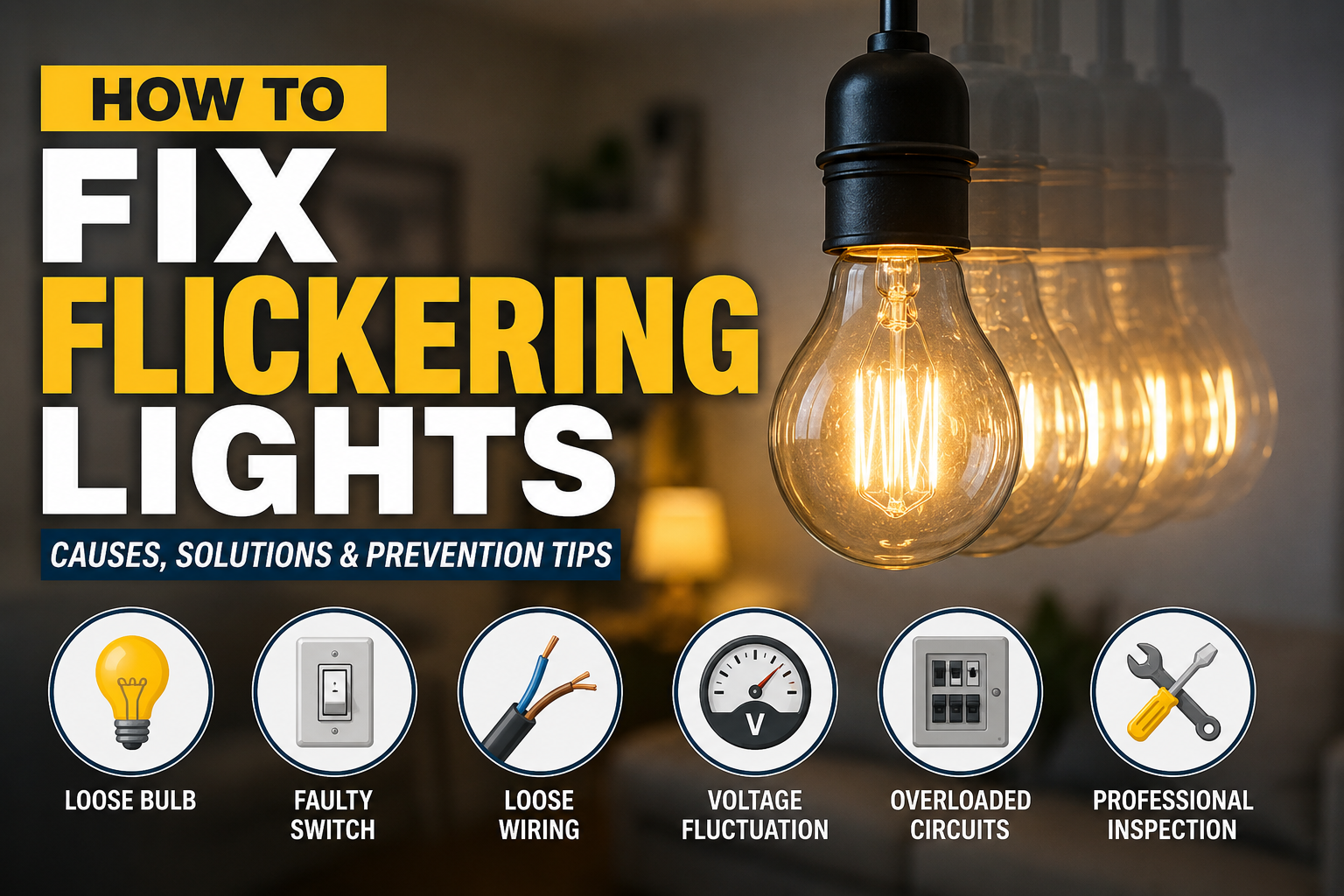
Common causes include:
- Loose light bulbs
- Faulty light switches
- Loose wiring connections
- Voltage fluctuations
- Overloaded circuits
- Aging electrical systems
- Defective light fixtures
- Problems with utility power
Sometimes the issue affects only one bulb. In other cases, multiple lights throughout the house may flicker at the same time.
The solution depends on identifying the root cause first.
Check If the Light Bulb Is Loose
One of the easiest ways to start how to fix flickering lights is by checking the bulb itself.
A loose bulb may not make proper contact with the socket. This interruption causes the light to flicker on and off.
Turn off the power and allow the bulb to cool. Then gently tighten it into the socket.
If the flickering stops afterward, you’ve likely solved the issue without any further repairs.
Think of it like a loose phone charger. When the connection isn’t secure, power becomes inconsistent.
Replace an Old or Faulty Bulb
Sometimes the bulb has simply reached the end of its lifespan.
LED, CFL, and incandescent bulbs can all fail over time. A failing bulb may flicker before completely burning out.
To test this:
- Remove the flickering bulb
- Install a new bulb
- Turn the light back on
If the new bulb works normally, the old bulb was the problem.
This is often the quickest answer to how to fix flickering lights in a single fixture.
Inspect the Light Switch
A worn-out switch can also create flickering.
Over time, internal components inside the switch may become loose or damaged. This can interrupt electrical flow.
Signs of a bad switch include:
- Flickering when the switch is touched
- Crackling sounds
- Delayed response
- Loose switch movement
If you notice these symptoms, replacing the switch may solve the issue.
Always turn off power at the breaker before inspecting electrical switches.
Check for Dimmer Switch Compatibility
Many homeowners install LED bulbs without realizing their dimmer switches may not support them.
Older dimmers were often designed for incandescent bulbs. When paired with modern LEDs, flickering can occur.
If you’re researching how to fix flickering lights, check whether:
- Your dimmer supports LED bulbs
- The bulb is labeled “dimmable”
- The dimmer is compatible with the bulb wattage
Replacing an outdated dimmer often eliminates persistent flickering.
Look for Loose Electrical Connections
Loose wiring is a more serious cause of flickering lights.
Electrical current travels through connections. If a wire becomes loose, power flow may become unstable.
Warning signs include:
- Frequent flickering
- Burning smells
- Warm outlets
- Buzzing sounds
- Sparking
A loose connection should never be ignored. Electrical arcing can create fire hazards.
If you suspect loose wiring, contact a licensed electrician immediately.
Determine Whether Multiple Lights Are Flickering
When only one light flickers, the issue is usually localized.
However, if several lights flicker simultaneously, the cause may be larger.
Ask yourself:
- Do lights flicker when appliances start?
- Are multiple rooms affected?
- Does the problem happen daily?
These clues can help identify whether the issue involves a circuit or the home’s electrical system.
Understanding the pattern is an important step in how to fix flickering lights effectively.
Check for Circuit Overload
Modern homes use many power-hungry devices.
Air conditioners, refrigerators, microwaves, and electric heaters can place heavy demands on electrical circuits.
When too many devices run on the same circuit, voltage can temporarily drop, causing lights to flicker.
You can reduce overload by:
- Unplugging unused devices
- Redistributing appliances across circuits
- Avoiding multiple high-power devices on one breaker
If overload happens regularly, your electrical system may need upgrading.
Monitor Voltage Fluctuations
Voltage should remain relatively stable throughout the home.
Large fluctuations can cause noticeable flickering.
Common signs include:
- Lights becoming brighter and dimmer
- Electronics behaving unpredictably
- Appliances running inconsistently
According to many electricians, “Stable voltage is the foundation of a healthy electrical system.”
A professional can test your home’s voltage levels and identify abnormalities.
Examine the Electrical Panel
The breaker panel distributes electricity throughout the house.
Loose breakers or aging panels can contribute to flickering lights.
Signs of panel issues include:
- Flickering throughout the house
- Frequently tripped breakers
- Unusual noises
- Burning odors
Older panels may struggle to handle modern electrical demands.
If your home has an aging electrical panel, a professional inspection is recommended.
Check Outdoor Utility Power
Sometimes the problem isn’t inside your home at all.
Power company equipment can occasionally cause flickering.
Look for:
- Neighborhood-wide flickering
- Power interruptions
- Tree branches touching power lines
- Weather-related issues
If neighbors are experiencing the same problem, contact your utility provider.
They can inspect transformers, power lines, and service connections.
How LED Lights Can Cause Flickering
LED bulbs are energy-efficient but may flicker under certain conditions.
Common LED-related causes include:
- Incompatible dimmers
- Poor-quality bulbs
- Driver failure
- Voltage fluctuations
Purchasing high-quality LED products often reduces these issues significantly.
While cheaper bulbs may save money initially, they sometimes create long-term problems.
When Flickering Lights Become Dangerous
Not every flickering light is an emergency, but some warning signs require immediate attention.
Call an electrician if you notice:
- Burning smells
- Smoke
- Sparking
- Hot switches or outlets
- Buzzing electrical sounds
Electrical fires often begin with small warning signs.
As experts often remind homeowners, “Electricity rarely fails silently.”
Taking these symptoms seriously can prevent major damage.
Preventing Future Flickering Problems
After learning how to fix flickering lights, it’s equally important to prevent future issues.
Helpful habits include:
- Using quality light bulbs
- Avoiding overloaded circuits
- Scheduling electrical inspections
- Replacing worn switches
- Maintaining electrical panels
Preventive maintenance is usually cheaper than emergency repairs.
A well-maintained electrical system operates more safely and efficiently.
Simple Troubleshooting Checklist
If you’re trying to figure out how to fix flickering lights, follow this checklist:
- Tighten the bulb.
- Replace the bulb.
- Test the switch.
- Check dimmer compatibility.
- Observe whether multiple lights flicker.
- Reduce circuit load.
- Inspect the breaker panel.
- Contact an electrician if problems persist.
Following these steps can help narrow down the cause quickly.
Final Thoughts
Learning how to fix flickering lights starts with identifying whether the issue is simple or serious. In many cases, a loose bulb, faulty switch, or incompatible dimmer is responsible. However, recurring flickering throughout the home may indicate wiring problems, overloaded circuits, or electrical panel issues.
The key is not to ignore the warning signs. A small flicker today could point to a larger electrical problem tomorrow. By troubleshooting carefully and seeking professional help when needed, you can restore stable lighting and maintain a safer home environment.
When it comes to how to fix flickering lights, a little attention now can save significant time, money, and stress later.