


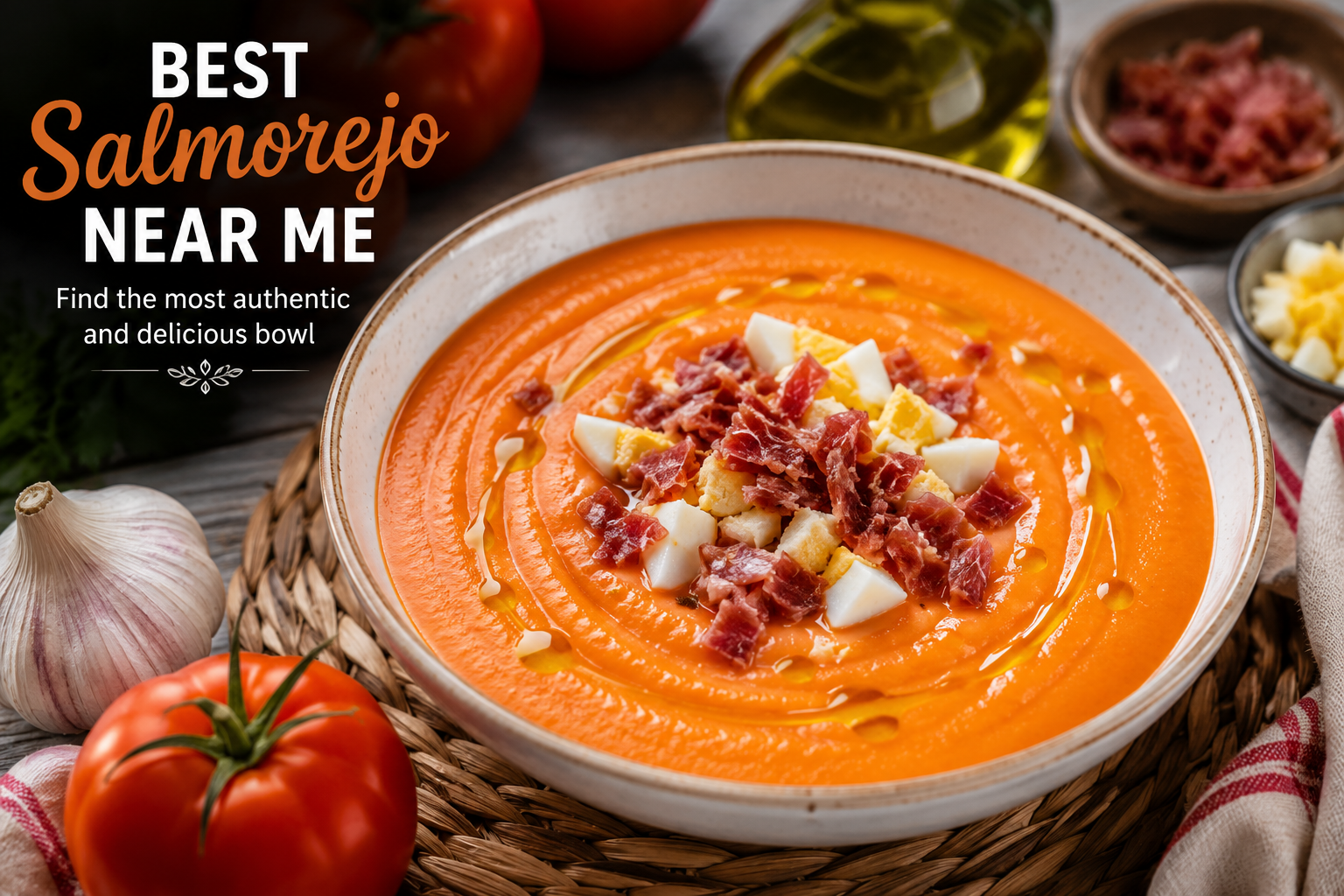
Searching for the best salmorejo near me usually means you want something more satisfying than an ordinary cold tomato soup. You are looking for a creamy, rich, refreshing dish that tastes homemade and carries the traditional flavors of southern Spain.
A great bowl of salmorejo should feel simple but memorable. The tomatoes should taste fresh, the olive oil should add smoothness, and the bread should create a thick texture without making the dish heavy.
Whether you are visiting a Spanish restaurant, exploring a tapas bar, or ordering food at home, knowing what authentic salmorejo should look and taste like can help you choose the right place.
As many Spanish food lovers say, “The best traditional dishes do not need endless ingredients; they need excellent ingredients treated with care.”
What Is Traditional Salmorejo?
Salmorejo is a cold Spanish dish that originated in Córdoba, a historic city in the Andalusia region of southern Spain. It is traditionally made with ripe tomatoes, bread, extra virgin olive oil, garlic, and salt.
Unlike lighter chilled soups, salmorejo has a thick, creamy consistency. It is usually served in a bowl and topped with chopped hard-boiled egg and small pieces of Spanish ham.
The flavor is fresh, slightly sweet, savory, and gently garlicky. Good-quality olive oil gives it a smooth finish and a rich Mediterranean character.
When searching for the best salmorejo near me, look for restaurants that describe it as Córdoba-style, Andalusian salmorejo, or traditional salmorejo cordobés. These descriptions often indicate a more authentic preparation.
What Makes a Salmorejo Truly Delicious?
The quality of salmorejo depends heavily on its ingredients. Because the recipe is simple, every ingredient has a noticeable effect on the final taste.
The tomatoes should be ripe, juicy, and naturally sweet. Pale or unripe tomatoes can make the soup taste watery, sour, or flat.
The bread should create body without overpowering the tomato flavor. Traditional recipes often use day-old white bread because it blends easily and absorbs the olive oil well.
Extra virgin olive oil is equally important. It should add a smooth, slightly fruity flavor rather than leaving the soup greasy or bitter.
The garlic should be noticeable but controlled. Too much garlic can dominate the entire dish, while too little can make the flavor feel incomplete.
A well-made salmorejo is balanced. As one experienced Spanish chef might put it, “You should taste the tomato first, the olive oil second, and the garlic only as a gentle background note.”
How Salmorejo Should Look and Feel
Authentic salmorejo usually has a deep orange-red or coral color. Its appearance may vary depending on the tomatoes and olive oil used, but it should look fresh and vibrant.
The texture should be thicker than gazpacho. It should coat the spoon gently rather than running off like juice.
A good comparison is a smooth tomato-based cream or a thick smoothie. However, it should still feel light and refreshing when eaten cold.
The surface should look silky and evenly blended. Large bread pieces, tomato skins, or visible lumps may suggest that the mixture was not blended properly.
When you order the best salmorejo near me, the bowl should arrive properly chilled but not frozen. Extremely cold temperatures can hide the tomato flavor and make the olive oil feel heavy.
Salmorejo Versus Gazpacho
Many people confuse salmorejo with gazpacho because both are cold Spanish tomato dishes. However, they are quite different in texture, ingredients, and serving style.
Gazpacho usually contains tomatoes, cucumber, peppers, onions, garlic, vinegar, olive oil, and water. It is thinner and can sometimes be served in a glass.
Salmorejo is thicker and normally contains fewer vegetables. The traditional base focuses mainly on tomatoes, bread, olive oil, garlic, and salt.
Gazpacho is crisp, light, and vegetable-forward. Salmorejo is creamier, richer, and more filling.
If you want a refreshing drink-like starter, gazpacho may be the better choice. If you want something smooth, satisfying, and suitable as a light meal, searching for the best salmorejo near me makes more sense.
How to Find the Best Salmorejo Near Me
Start by searching for Spanish restaurants, Andalusian restaurants, tapas bars, or Mediterranean cafés in your area. Salmorejo may not always appear in the restaurant name, so check the full menu.
Look at recent customer photos instead of relying only on promotional images. Real customer pictures can reveal the portion size, texture, color, and toppings.
Read reviews that mention specific details. Comments such as “fresh tomato flavor,” “creamy texture,” or “authentic Córdoba-style recipe” are more useful than general statements like “the food was good.”
You should also check whether the restaurant makes salmorejo in-house. Freshly prepared salmorejo usually tastes brighter than pre-packaged or mass-produced versions.
Useful search phrases include:
- Best salmorejo near me
- Authentic Spanish salmorejo nearby
- Córdoba-style salmorejo restaurant
- Spanish cold tomato soup near me
- Andalusian tapas near me
- Traditional Spanish restaurant nearby
A restaurant with a smaller, focused Spanish menu may serve better salmorejo than a place offering dozens of unrelated dishes. Specialization often leads to better ingredient quality and more careful preparation.
Check the Restaurant Menu Carefully
The menu description can tell you a lot about how the salmorejo is prepared. A traditional listing should mention tomatoes, bread, olive oil, garlic, egg, or Spanish ham.
Be cautious if the description includes large amounts of cream, mayonnaise, or artificial thickeners. Traditional salmorejo gets its creamy texture from bread and emulsified olive oil, not dairy cream.
Some restaurants offer modern versions with avocado, beetroot, strawberries, smoked fish, or herbs. These can be delicious, but they are not the same as classic salmorejo cordobés.
For your first experience, choose the traditional version. Once you understand its original flavor and texture, you can explore creative variations more confidently.
When comparing options for the best salmorejo near me, prioritize menu descriptions that highlight fresh tomatoes, extra virgin olive oil, and traditional preparation.
Read Recent Reviews, Not Just the Rating
A restaurant’s overall rating may not accurately represent one specific dish. A highly rated restaurant can still serve disappointing salmorejo, while a smaller tapas bar may prepare an excellent version.
Search within reviews for words such as “salmorejo,” “cold tomato soup,” “Córdoba,” or “Andalusian.” This helps you find comments from people who actually ordered the dish.
Recent reviews are more valuable because restaurant staff, recipes, suppliers, and portion sizes can change over time.
Pay attention to repeated compliments or complaints. If several guests describe the salmorejo as fresh, creamy, and authentic, that is a strong positive sign.
If multiple reviewers call it watery, overly salty, or too garlicky, consider trying another restaurant.
“The best review is not always the longest one; it is the one that tells you exactly what arrived in the bowl.”
Look at Customer Photos
Customer photos can help you identify a good salmorejo before visiting the restaurant. Look for a smooth, thick consistency and a rich orange-red color.
Traditional toppings are normally placed in the center or scattered across the surface. These may include chopped boiled egg, jamón serrano, jamón ibérico, or a drizzle of olive oil.
Avoid judging the dish only by decoration. A beautifully arranged bowl may still taste bland, while a simple-looking serving may be deeply flavorful.
However, a watery appearance, excessive oil floating on top, or an unusually pale color may indicate poor balance or low-quality tomatoes.
If the restaurant’s photos consistently show fresh-looking dishes, generous toppings, and careful presentation, it may be a strong candidate for the best salmorejo near me.
What Authentic Salmorejo Should Taste Like
The first flavor should come from ripe tomatoes. You may notice natural sweetness, gentle acidity, and a fresh garden-like quality.
The olive oil should make the texture silky and give the soup a subtle fruity or peppery finish. It should not leave a heavy layer of grease in your mouth.
Garlic should add depth without creating a harsh burning sensation. Salt should sharpen the tomato flavor rather than making the dish noticeably salty.
The bread should not have a strong taste. Its main job is to create thickness and help combine the tomatoes with the olive oil.
The toppings should provide contrast. The egg adds softness, while Spanish ham adds saltiness and a slightly smoky, cured flavor.
When everything is balanced, each spoonful feels rich but refreshing. That balance is what separates an average cold tomato soup from the best salmorejo near me.
Traditional Salmorejo Toppings
Classic salmorejo is usually served with chopped hard-boiled egg and finely diced Spanish cured ham. These toppings are not only decorative; they improve the flavor and texture.
The egg adds mildness and makes the dish more filling. The ham provides salt, depth, and a pleasant contrast to the sweet tomatoes.
A small drizzle of extra virgin olive oil may also be added before serving. This gives the bowl a glossy finish and enhances its aroma.
Some restaurants serve croutons, herbs, tuna, vegetables, or smoked fish on top. These options can work well, but they move the dish away from its most traditional form.
Vegetarians should ask whether the ham can be removed. Salmorejo itself is generally meat-free, although toppings and preparation methods may vary by restaurant.
Vegans should also ask about egg toppings and cross-contact. The base recipe is often vegan, but the final serving may not be.
Signs of Poor-Quality Salmorejo
Watery salmorejo is one of the clearest warning signs. The soup should be thick and spoonable, not thin like tomato juice.
A strongly sour flavor may suggest unripe tomatoes, too much vinegar, or poor ingredient balance. Traditional salmorejo can have gentle acidity, but it should not taste sharply acidic.
An oily surface can indicate that the olive oil was not blended properly. Proper emulsification should make the entire mixture creamy rather than leaving separated oil on top.
Excessive garlic is another common problem. Garlic should support the tomatoes, not overpower them.
Other warning signs include:
- A pale or artificial-looking color
- Large bread lumps
- A stale or fermented smell
- Excessive salt
- Warm serving temperature
- No fresh tomato flavor
- A texture similar to bottled tomato sauce
If the dish tastes mainly like garlic, bread, or vinegar, it probably does not deserve to be called the best salmorejo near me.
Should Salmorejo Be Expensive?
Salmorejo is made with relatively simple ingredients, so it should usually be reasonably priced. However, the cost may increase when restaurants use premium tomatoes, artisan bread, organic olive oil, or high-quality jamón ibérico.
Location also affects pricing. A small local tapas bar may charge less than an upscale Spanish restaurant in a city center.
The cheapest option is not always the best value. A slightly more expensive bowl made with ripe tomatoes and excellent olive oil may provide a much better experience.
Consider the portion size as well. Salmorejo may be served as a small tapa, a starter, or a full bowl.
Before ordering, check whether the listed price refers to a tasting portion or a full serving. This prevents disappointment and makes restaurant comparisons more accurate.
Best Foods to Order With Salmorejo
Salmorejo works well as a starter before grilled meat, seafood, or vegetable dishes. Its cold temperature makes it especially enjoyable during warm weather.
For a tapas-style meal, pair it with Spanish tortilla, croquetas, patatas bravas, grilled prawns, or marinated olives.
It also goes well with crusty bread, although salmorejo already contains bread in its base. A small amount is usually enough.
For a lighter meal, order a full bowl with a side salad or grilled vegetables. The bread, olive oil, egg, and ham can make it more filling than it first appears.
A refreshing drink, such as sparkling water, lemonade, or a light Spanish beverage, can complement the rich texture.
When ordering the best salmorejo near me, avoid combining it with too many heavy fried dishes unless you are sharing the meal. Salmorejo feels fresh, but its olive oil and bread still make it satisfying.
Is Salmorejo Healthy?
Salmorejo contains tomatoes, which provide vitamins, antioxidants, and natural plant compounds. It also includes olive oil, a key ingredient in Mediterranean-style eating.
The dish can be satisfying because it contains healthy fats and bread-based carbohydrates. Traditional toppings may also add protein.
However, portion size matters. Salmorejo can be higher in calories than gazpacho because it normally contains more bread and olive oil.
Spanish ham can also add sodium. People limiting salt may prefer a smaller amount of ham or request the topping on the side.
Overall, salmorejo can be part of a balanced meal. It is especially useful when you want something refreshing that feels more substantial than a simple salad.
The healthiest version is usually made with fresh tomatoes, moderate bread, high-quality olive oil, and sensible toppings.
Can You Order Salmorejo for Delivery?
Salmorejo can travel reasonably well because it is served cold and does not depend on a crispy texture. However, proper packaging and temperature control are important.
Choose restaurants that package the toppings separately. This keeps the egg and ham fresh and prevents them from sinking into the soup during transportation.
The container should be tightly sealed and kept chilled. Once delivered, place it in the refrigerator if you are not eating it immediately.
Stir the salmorejo gently before serving because some separation may occur during delivery. A small amount of separation is normal, but the mixture should quickly become smooth again.
When searching for the best salmorejo near me on a delivery app, check recent reviews specifically related to packaging, freshness, and food temperature.
Questions to Ask Before Ordering
You do not need to interview the restaurant, but a few simple questions can help when menu information is unclear.
You can ask:
- Is the salmorejo made fresh in-house?
- Is it traditional Córdoba-style salmorejo?
- Does it contain dairy?
- Can the ham or egg be removed?
- Is it served as a tapa or a full bowl?
- What type of olive oil is used?
- Are the toppings packaged separately for delivery?
A knowledgeable server should be able to answer basic ingredient questions. Clear answers often indicate that the kitchen understands the dish and prepares it carefully.
Can Vegetarian or Vegan Diners Enjoy Salmorejo?
The traditional salmorejo base usually contains tomatoes, bread, olive oil, garlic, and salt. These ingredients are naturally vegan.
However, the classic toppings include egg and Spanish ham. Vegetarians can request the dish without ham, while vegans can ask for both the ham and egg to be removed.
It is also important to confirm that the bread does not contain milk, butter, or other animal-derived ingredients.
Some modern restaurants offer plant-based toppings such as avocado, toasted seeds, cucumber, roasted peppers, or vegan cheese.
When looking for the best salmorejo near me, plant-based diners should search menu descriptions and contact the restaurant when ingredient details are unclear.
Is Homemade Salmorejo Better Than Restaurant Salmorejo?
Homemade salmorejo can be excellent because you control the tomatoes, olive oil, garlic, bread, seasoning, and thickness.
However, experienced Spanish chefs often understand the correct proportions and blending technique better. They may also have access to specific tomato varieties and high-quality Spanish olive oil.
A restaurant version is useful when you want to experience an authentic reference point before making it at home.
Once you know how proper salmorejo should taste, you can adjust your homemade version more confidently.
The best choice depends on convenience, ingredient quality, and preparation skill. A carefully made homemade bowl can beat a poor restaurant version, but an authentic Córdoba-style restaurant may deliver a flavor that is difficult to recreate immediately.
When Is the Best Time to Eat Salmorejo?
Salmorejo is especially popular during spring and summer because it is served cold and feels refreshing in warm weather.
It works well for lunch, as a starter, or as part of an evening tapas meal. A full serving can also become a light dinner.
Tomato quality is often strongest during the warmer months, so seasonal salmorejo may taste sweeter and more vibrant.
Some Spanish restaurants only offer it seasonally. Others serve it throughout the year due to customer demand.
Before making a special trip for the best salmorejo near me, check the current menu or call the restaurant to confirm availability.
How to Compare Two Local Salmorejo Options
If you have several Spanish restaurants nearby, compare them using a few simple standards.
First, look at authenticity. A restaurant specializing in Andalusian food may understand salmorejo better than a general European café.
Second, compare recent customer photos and dish-specific reviews. Focus on texture, color, toppings, and freshness.
Third, review the ingredient description. Traditional ingredients and extra virgin olive oil are strong positive signs.
Fourth, consider value. Compare portion size, topping quality, price, and whether bread or side dishes are included.
Finally, trust your own taste. Some people prefer stronger garlic, while others enjoy a sweeter tomato profile.
“The best bowl is not always the most expensive or the most photographed; it is the one you immediately want to order again.”
Final Tips for Choosing the Best Salmorejo Near Me
Choose a restaurant that uses fresh ingredients, clearly describes its preparation, and receives consistent praise for Spanish dishes.
Look for a thick, smooth texture, a vibrant tomato color, controlled garlic, and high-quality olive oil.
Traditional toppings such as chopped egg and Spanish ham are a good sign, although vegetarian and vegan adjustments are often possible.
Avoid versions that appear watery, oily, excessively pale, or overloaded with unnecessary ingredients.
Most importantly, select a place where salmorejo is treated as a genuine regional specialty rather than an ordinary tomato soup.
Finding the best salmorejo near me becomes much easier when you know exactly what to expect. A proper bowl should be cool, creamy, fresh, balanced, and deeply satisfying from the first spoonful to the last.
Frequently Asked Questions
Is salmorejo served hot or cold?
Salmorejo is traditionally served cold. It should be well chilled but not so cold that the tomato and olive oil flavors disappear.
Does traditional salmorejo contain cream?
No. Authentic salmorejo gets its creamy texture from bread, tomatoes, and emulsified olive oil rather than dairy cream.
Is salmorejo gluten-free?
Traditional salmorejo contains bread, so it is not normally gluten-free. Some restaurants may offer a gluten-free version using suitable bread or alternative thickeners.
Is salmorejo spicy?
Salmorejo is not usually spicy. Garlic may create a mild sharpness, but traditional recipes do not normally contain hot peppers.
What is the difference between salmorejo and tomato soup?
Salmorejo is a cold Spanish dish made with raw tomatoes, bread, olive oil, and garlic. Standard tomato soup is often cooked, served hot, and may contain stock, cream, herbs, or vegetables.
Can salmorejo be eaten as a main meal?
Yes. A large portion topped with egg and ham can be filling enough for a light lunch or dinner.
What city is famous for salmorejo?
Córdoba in Andalusia, Spain, is widely associated with traditional salmorejo cordobés.
What should I order with salmorejo?
Spanish tortilla, grilled seafood, croquetas, olives, roasted vegetables, and other tapas dishes pair well with salmorejo.
How can I find authentic salmorejo locally?
Search for Spanish or Andalusian restaurants, examine recent customer photos, read dish-specific reviews, and look for traditional Córdoba-style ingredients.
What makes the best salmorejo near me worth ordering?
The best version combines ripe tomatoes, quality olive oil, smooth texture, balanced garlic, proper chilling, and fresh traditional toppings.