


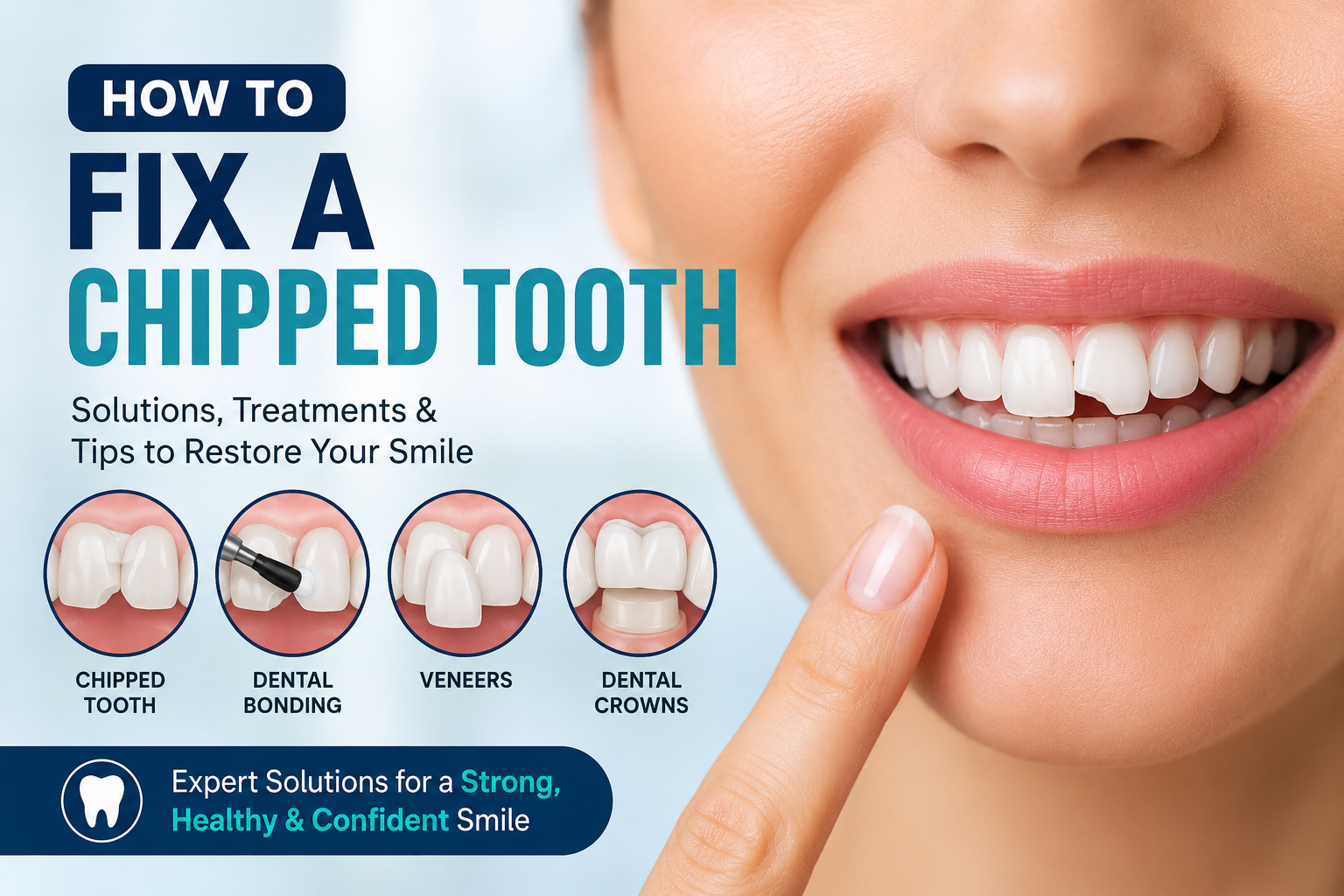
A chipped tooth can happen when you least expect it. You might bite into something hard, suffer a sports injury, or accidentally fall and damage a tooth. While a small chip may seem harmless, it can lead to discomfort, sensitivity, and even further dental problems if left untreated.
Understanding how to fix a chipped tooth is important because the right treatment depends on the size, location, and severity of the damage. The good news is that modern dentistry offers several effective solutions that can restore both the appearance and function of your tooth.
What Causes a Chipped Tooth?
Before learning how to fix a chipped tooth, it helps to understand why it happens.
Common causes include:
- Biting hard foods such as ice, nuts, or hard candy
- Sports-related injuries
- Falls and accidents
- Teeth grinding (bruxism)
- Tooth decay that weakens the enamel
- Using teeth to open packages or bottles
Think of tooth enamel like the protective paint on a car. Once that outer layer is damaged, the surface underneath becomes more vulnerable to further wear and tear.
Signs You Have a Chipped Tooth
Not every chipped tooth causes immediate pain. In some cases, the damage is only visible when you look in a mirror.
Common signs include:
- A rough or sharp edge
- Tooth sensitivity to hot or cold foods
- Pain when biting down
- Visible crack or missing piece
- Irritation on the tongue or inside of the cheek
If you notice any of these symptoms, it is wise to learn how to fix a chipped tooth and seek professional dental advice.
What to Do Immediately After Chipping a Tooth
Quick action can help prevent further damage.
Rinse Your Mouth
Use warm water to gently rinse away debris and keep the area clean.
Save Any Broken Pieces
If you can find the chipped piece, place it in a clean container. In some situations, a dentist may be able to reattach it.
Reduce Swelling
Apply a cold compress to the outside of your face for 10 to 15 minutes at a time.
Protect Sharp Edges
Dental wax or sugar-free chewing gum can temporarily cover sharp areas that may irritate your mouth.
Remember the saying, “A small problem fixed early often prevents a bigger problem later.” The same principle applies to chipped teeth.
How to Fix a Chipped Tooth: Professional Treatment Options
There is no single answer to how to fix a chipped tooth because treatment depends on the extent of the damage.
Dental Bonding
Dental bonding is one of the most common treatments for minor chips.
The dentist applies a tooth-colored resin to the damaged area and shapes it to match the natural tooth. The material is then hardened using a special light.
Best for:
- Small chips
- Front teeth
- Cosmetic improvements
Benefits:
- Affordable
- Quick procedure
- Natural appearance
Dental Veneers
A veneer is a thin shell placed over the front of the tooth.
It covers chips, discoloration, and minor imperfections while creating a natural-looking smile.
Best for:
- Front teeth
- Cosmetic repairs
- Multiple aesthetic concerns
Benefits:
- Long-lasting
- Stain-resistant
- Highly natural appearance
Dental Crowns
If a large portion of the tooth is damaged, a crown may be necessary.
A crown acts like a protective cap that covers the entire tooth, restoring its shape and strength.
Best for:
- Large chips
- Weakened teeth
- Back teeth under heavy chewing pressure
Benefits:
- Excellent durability
- Strong protection
- Improved function
Tooth Reattachment
Sometimes the original broken piece can be bonded back onto the tooth.
This option preserves the natural appearance and structure of the tooth.
Best for:
- Recent injuries
- Intact tooth fragments
Root Canal Treatment
If the chip exposes the tooth’s inner pulp, a root canal may be needed before restoration.
This procedure removes damaged tissue and prevents infection.
Best for:
- Severe chips
- Tooth nerve exposure
- Significant pain
How to Fix a Chipped Tooth at Home
Many people search for how to fix a chipped tooth at home, but it is important to understand the limitations.
Home remedies cannot permanently repair a chipped tooth. However, they can help manage the situation until you see a dentist.
Temporary measures include:
- Using dental wax
- Applying temporary dental repair kits
- Avoiding hard foods
- Keeping the area clean
- Taking over-the-counter pain relievers if needed
These solutions are only temporary and should not replace professional treatment.
When Is a Chipped Tooth an Emergency?
Some chips require immediate dental care.
Contact a dentist right away if you experience:
- Severe pain
- Significant bleeding
- Swelling
- Signs of infection
- A large missing section of the tooth
- Difficulty chewing or speaking
A small chip may not seem urgent, but deeper damage can quickly become a serious problem.
Cost of Fixing a Chipped Tooth
The cost of how to fix a chipped tooth varies depending on the treatment selected.
Typical factors affecting cost include:
- Severity of the chip
- Treatment type
- Geographic location
- Dentist experience
- Insurance coverage
Generally, dental bonding is the least expensive option, while crowns and veneers tend to cost more due to their durability and customization.
How Long Does Repair Last?
The lifespan of a repair depends on the treatment and oral care habits.
Approximate durability:
- Dental bonding: 3–10 years
- Veneers: 10–15 years or more
- Crowns: 10–20 years or longer
Regular dental checkups and good oral hygiene can help extend the life of your restoration.
Preventing Future Tooth Chips
Once you learn how to fix a chipped tooth, the next step is preventing it from happening again.
Wear a Mouthguard
If you play sports, a mouthguard provides valuable protection against impacts.
Avoid Hard Objects
Never chew on ice, pens, or hard candy.
Treat Teeth Grinding
Night guards can protect your teeth from grinding while you sleep.
Maintain Oral Health
Strong, healthy teeth are less likely to chip. Brush twice daily, floss regularly, and visit your dentist for routine checkups.
Don’t Use Teeth as Tools
Opening packages or bottles with your teeth can easily lead to chips and fractures.
Real-Life Example
Imagine dropping your smartphone and seeing a crack in the screen. At first, it may seem minor, but over time the crack can spread and make the device harder to use.
A chipped tooth works in a similar way. What starts as a small chip can develop into a larger fracture if it isn’t repaired promptly. That’s why understanding how to fix a chipped tooth early can save both time and money.
Frequently Asked Questions
Can a chipped tooth heal naturally?
No. Unlike bones, tooth enamel cannot regenerate itself. Professional treatment is usually required.
Is a chipped tooth always painful?
No. Small chips may cause no pain at all, while larger chips can expose sensitive inner layers of the tooth.
Can I eat with a chipped tooth?
Yes, but avoid hard, crunchy, or sticky foods until the tooth has been repaired.
How quickly should I see a dentist?
As soon as possible. Early treatment helps prevent further damage and complications.
Final Thoughts
Knowing how to fix a chipped tooth can help you respond quickly and protect your oral health. Whether the solution involves dental bonding, veneers, crowns, or another treatment, modern dentistry offers effective ways to restore your smile.
A chipped tooth is not something to ignore. Even a minor chip can become a larger issue over time. By seeking timely treatment and following preventive measures, you can keep your teeth strong, healthy, and looking their best for years to come.