


Introduction
If you’ve ever noticed your lower back arching too much, your stomach sticking out even when you’re fit, or persistent tightness in your hips, you may be wondering how to fix anterior pelvic tilt. This common postural issue affects people of all ages, especially those who spend long hours sitting.
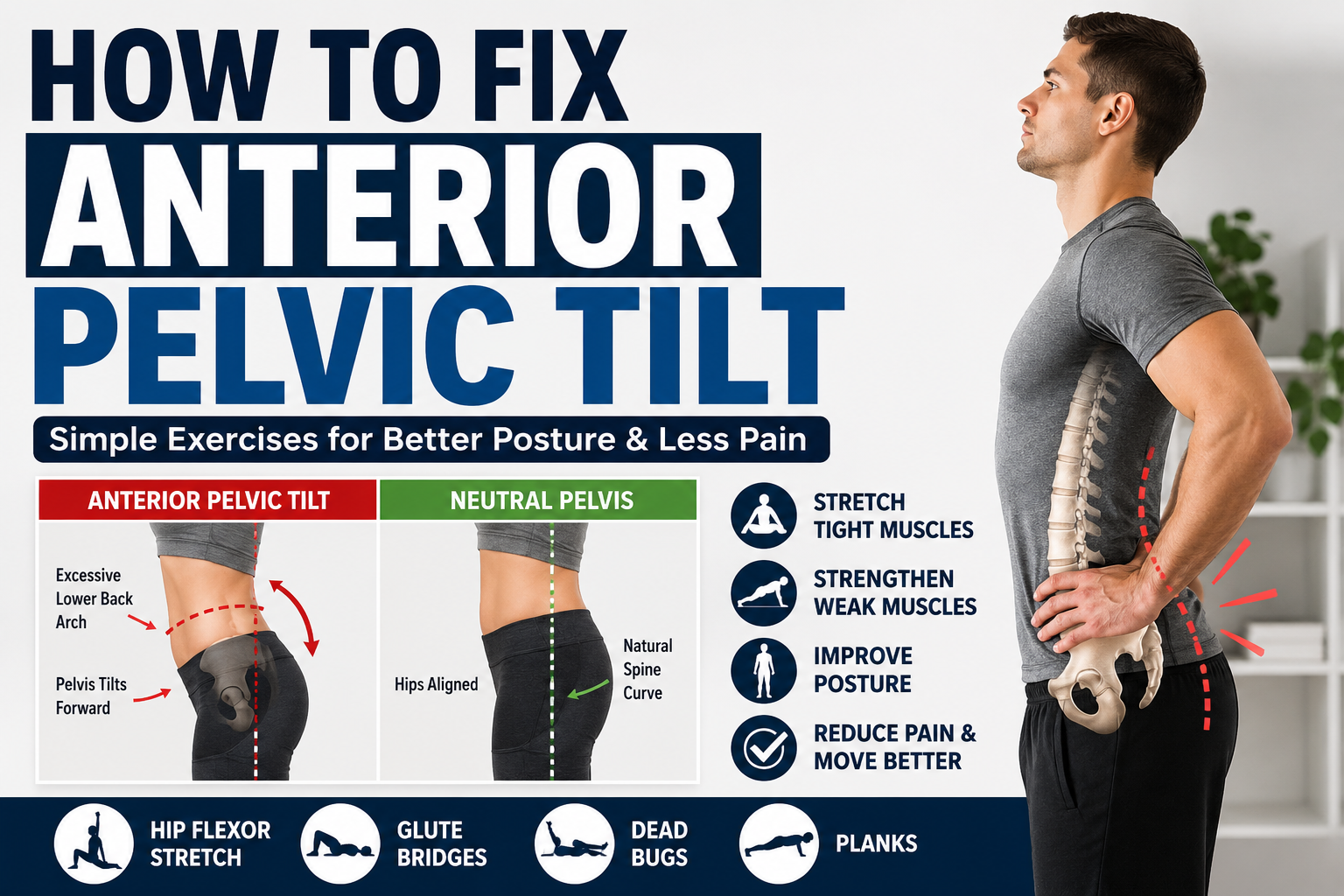
Anterior pelvic tilt happens when the front of the pelvis rotates downward and the back rises upward. This creates an exaggerated curve in the lower back and can lead to discomfort, poor posture, and reduced athletic performance.
The good news is that learning how to fix anterior pelvic tilt is often possible with the right combination of stretching, strengthening, and daily habit adjustments.
What Is Anterior Pelvic Tilt?
Anterior pelvic tilt (APT) is a postural condition where the pelvis tilts forward more than normal. This position places extra stress on the lower back and hips.
Imagine your pelvis as a bowl filled with water. In a neutral position, the water stays level. With anterior pelvic tilt, the bowl tips forward, causing the water to spill out the front. That’s essentially what happens to your posture.
Many people don’t realize they have APT until they experience back pain, hip tightness, or notice changes in their body alignment.
Common Signs of Anterior Pelvic Tilt
Recognizing the symptoms is the first step in understanding how to fix anterior pelvic tilt.
Physical Signs
- Excessive arch in the lower back
- Belly protrudes forward
- Buttocks stick out more than usual
- Tight hip flexors
- Tight lower back muscles
Common Symptoms
- Lower back discomfort
- Hip stiffness
- Muscle fatigue while standing
- Poor posture during walking
- Reduced core stability
A simple side-view photo often reveals these signs clearly.
What Causes Anterior Pelvic Tilt?
Several lifestyle and muscle imbalances contribute to APT.
Prolonged Sitting
Sitting for hours shortens the hip flexor muscles. Over time, these muscles pull the pelvis forward.
Office workers, students, and gamers frequently develop this issue due to extended sitting periods.
Weak Core Muscles
The abdominal muscles help stabilize the pelvis. When they become weak, the pelvis may shift out of alignment.
As fitness experts often say, “A strong core is the foundation of good posture.”
Weak Glutes
The glute muscles play a major role in pelvic positioning. Weak glutes reduce support and allow the pelvis to tilt forward.
Poor Exercise Habits
Some people focus heavily on certain muscle groups while neglecting others. This creates imbalances that contribute to anterior pelvic tilt.
Why It’s Important to Learn How to Fix Anterior Pelvic Tilt
Ignoring APT can lead to more than just posture problems.
Potential issues include:
- Chronic lower back pain
- Hip discomfort
- Increased injury risk
- Poor movement mechanics
- Reduced athletic performance
Correcting pelvic alignment can improve both comfort and overall body function.
How to Check if You Have Anterior Pelvic Tilt
A quick self-assessment can provide clues.
The Wall Test
Stand with your back against a wall.
If there is a very large gap between your lower back and the wall, you may have anterior pelvic tilt.
Side Profile Check
Take a photo from the side.
Look for:
- An exaggerated lower back arch
- Forward-tilted pelvis
- Protruding abdomen
For an accurate diagnosis, consult a qualified physical therapist or healthcare professional.
How to Fix Anterior Pelvic Tilt Naturally
The most effective approach combines stretching tight muscles and strengthening weak ones.
Consistency is more important than intensity.
Stretch Tight Hip Flexors
Tight hip flexors are one of the biggest contributors to APT.
Kneeling Hip Flexor Stretch
- Kneel on one knee.
- Place the other foot in front.
- Gently push your hips forward.
- Hold for 30–60 seconds.
Repeat on both sides.
This exercise helps lengthen shortened muscles that pull the pelvis forward.
Stretch the Lower Back Carefully
The lower back often becomes overactive in people with APT.
Child’s Pose
This gentle yoga position can help relax lower back muscles.
- Sit back onto your heels.
- Extend your arms forward.
- Lower your chest toward the floor.
- Hold for 30 seconds.
Practice daily for the best results.
Strengthen Your Core
A strong core is essential when learning how to fix anterior pelvic tilt.
Dead Bug Exercise
- Lie on your back.
- Raise your arms and legs.
- Slowly lower opposite arm and leg.
- Return to the starting position.
Perform 10–15 repetitions per side.
This exercise trains core stability without stressing the lower back.
Planks
Planks build deep abdominal strength and improve posture.
Start with:
- 20–30 seconds
- 2–3 sets
Increase duration gradually.
Strengthen Your Glutes
Strong glutes help pull the pelvis into a healthier position.
Glute Bridges
- Lie on your back.
- Bend your knees.
- Lift your hips upward.
- Squeeze your glutes at the top.
Perform 3 sets of 12–15 repetitions.
Hip Thrusts
Hip thrusts are one of the most effective exercises for glute development.
Many athletes use them to improve posture, power, and pelvic alignment.
Practice Pelvic Tilts
Pelvic tilt exercises teach your body how a neutral pelvis feels.
Posterior Pelvic Tilt Exercise
- Lie on your back.
- Tighten your abdominal muscles.
- Flatten your lower back against the floor.
- Hold for 5 seconds.
Repeat 10–15 times.
This movement directly addresses the mechanics involved in how to fix anterior pelvic tilt.
Improve Your Sitting Posture
You can exercise daily, but poor sitting habits may slow your progress.
Better Sitting Tips
- Keep feet flat on the floor.
- Sit with a neutral spine.
- Avoid slouching.
- Take movement breaks every 30–60 minutes.
- Adjust your chair height properly.
Small daily changes often produce significant long-term results.
Stand Correctly Throughout the Day
Many people unknowingly stand with an exaggerated lower back arch.
Proper Standing Position
- Engage your core lightly.
- Keep shoulders relaxed.
- Avoid pushing your hips forward.
- Distribute weight evenly on both feet.
Think of standing tall rather than leaning backward.
The Role of Mobility Training
Mobility exercises help restore normal movement patterns.
Useful mobility drills include:
- Hip circles
- World’s greatest stretch
- Cat-cow stretch
- Dynamic lunges
Adding mobility work can speed up progress when learning how to fix anterior pelvic tilt.
How Long Does It Take to Correct Anterior Pelvic Tilt?
The timeline varies depending on severity and consistency.
Many people notice improvements within:
- 4–6 weeks of regular exercise
- 2–3 months for visible posture changes
- Several months for long-term correction
As the saying goes, “Posture wasn’t created in a day, and it won’t be corrected in a day either.”
Patience and consistency are key.
Mistakes to Avoid
Many people unintentionally slow their progress.
Common Errors
- Only stretching without strengthening
- Ignoring glute training
- Sitting for long periods
- Performing exercises inconsistently
- Expecting overnight results
A balanced approach delivers the best outcomes.
Daily Routine for Fixing Anterior Pelvic Tilt
A simple routine may include:
Morning
- Hip flexor stretch
- Child’s pose
- Pelvic tilts
Afternoon
- Walking break
- Standing posture check
Evening
- Glute bridges
- Dead bugs
- Plank holds
This routine takes less than 20 minutes and can significantly improve posture over time.
When to Seek Professional Help
While many cases improve with exercise, some situations require expert guidance.
Consider seeing a healthcare professional if:
- Pain is severe
- Symptoms worsen
- Numbness occurs
- Exercises don’t help after several months
A physical therapist can create a personalized correction plan.
Final Thoughts
Understanding how to fix anterior pelvic tilt can improve posture, reduce discomfort, and help your body move more efficiently. The key is addressing the root cause through stretching tight muscles, strengthening weak ones, and improving daily movement habits.
Consistency matters more than perfection. Small efforts repeated every day can lead to meaningful changes over time. By following the strategies outlined above, you’ll be well on your way to better alignment, improved confidence, and a healthier body.