


Introduction
Hearing a high-pitched squeal every time you press the brake pedal can be frustrating. In many cases, the sound is harmless, but sometimes it can be a warning sign that your braking system needs attention. Knowing how to fix squeaky brakes can help you improve driving comfort, prevent costly repairs, and keep your vehicle safe.
Many drivers ignore brake noise until it becomes a bigger problem. As mechanics often say, “Your brakes speak before they fail.” Paying attention to unusual sounds early can save time and money later.
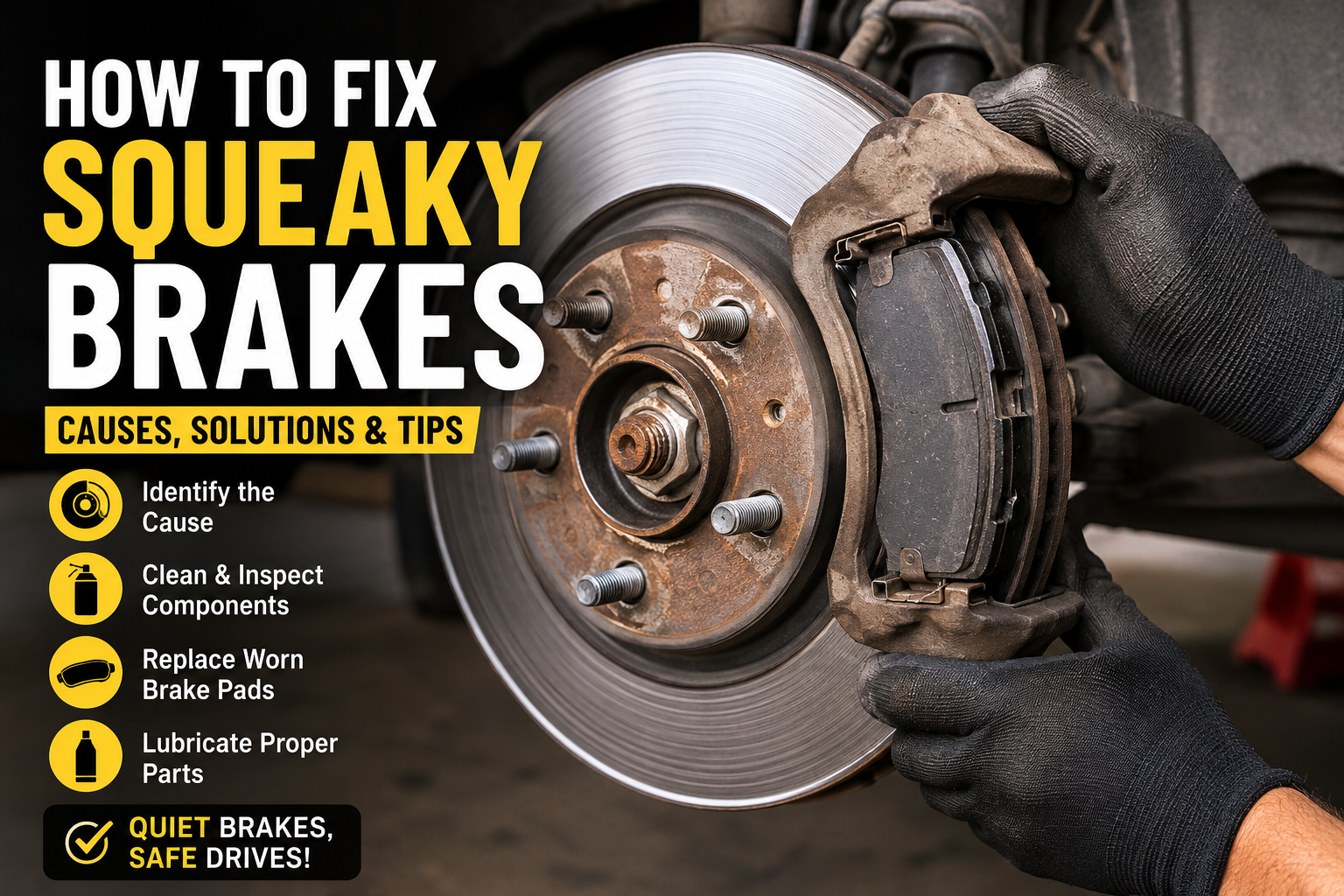
This guide explains how to fix squeaky brakes, the common causes of brake noise, and the best solutions to restore quiet and reliable braking performance.
Why Do Brakes Squeak?
Before learning how to fix squeaky brakes, it’s important to understand what causes the noise.
Brake squeaks occur when vibrations develop between brake components. These vibrations create sound waves that you hear as squealing, squeaking, or screeching noises.
Common causes include:
- Worn brake pads
- Dust and debris buildup
- Moisture on brake components
- Glazed brake pads or rotors
- Lack of lubrication
- Low-quality brake pads
- Brake hardware issues
The exact cause determines the best repair method.
Signs That Your Squeaky Brakes Need Attention
Not every squeak means there’s a serious problem. However, certain warning signs should never be ignored.
Look for these symptoms:
- Constant squealing while driving
- Grinding noises when braking
- Reduced braking performance
- Vibrations in the steering wheel
- Brake pedal pulsation
- Vehicle pulling to one side
If you notice any of these issues, investigate the brakes immediately.
How to Fix Squeaky Brakes Caused by Dust and Dirt
One of the most common reasons for brake noise is dirt buildup.
Road dust, brake dust, sand, and debris can collect between the rotor and brake pads. This creates friction and produces squeaking sounds.
Solution
Start by cleaning the brake system thoroughly.
Steps include:
- Remove the wheel.
- Inspect the brake assembly.
- Use brake cleaner spray.
- Remove dust from pads and rotors.
- Allow components to dry completely.
A simple cleaning often solves minor squeaking problems.
Think of it like cleaning a dusty fan. Once the buildup is removed, everything operates more smoothly and quietly.
How to Fix Squeaky Brakes When Brake Pads Are Worn
Brake pads naturally wear down over time.
Most brake pads contain wear indicators that intentionally create a squealing sound when replacement is needed.
Signs of Worn Pads
- Thin brake pad material
- Metal indicator touching rotor
- Constant squealing during braking
Solution
Replace worn brake pads as soon as possible.
Driving with excessively worn pads can damage the rotors, leading to more expensive repairs.
A good rule is to inspect pads whenever they reach around 3–4 mm of remaining material.
Moisture-Related Brake Squeaks
Morning brake squeaks are surprisingly common.
Rain, humidity, or overnight condensation can leave a thin layer of moisture on brake rotors.
When you first drive, the brakes may squeak temporarily.
Solution
In most cases, no repair is necessary.
Drive normally and apply the brakes gently several times. The moisture usually disappears within a few minutes.
If the squeaking continues after the brakes warm up, another issue may be present.
How to Fix Squeaky Brakes by Lubricating Brake Hardware
Brake components need proper lubrication at specific contact points.
Without lubrication, metal parts can rub together and create unwanted noise.
Areas That May Need Lubrication
- Caliper slide pins
- Pad backing plates
- Contact points
- Hardware clips
Solution
Use a high-temperature brake lubricant designed specifically for brake systems.
Never apply lubricant to:
- Brake pad surfaces
- Rotor surfaces
- Friction materials
Applying grease in the wrong location can reduce braking effectiveness and create safety hazards.
Glazed Brake Pads and Rotors
Glazing occurs when brake components become excessively hot.
Repeated hard braking can create a shiny, hardened surface on pads and rotors. This reduces friction and often causes squealing.
Common Causes
- Aggressive driving
- Frequent downhill braking
- Heavy towing
- Poor-quality brake materials
Solution
Depending on severity:
- Light glazing may be removed by sanding.
- Severe glazing often requires replacement.
Professional inspection is recommended if glazing is suspected.
Using Better Brake Pads
Sometimes the problem isn’t wear—it’s the brake pad material itself.
Low-cost brake pads often contain harder compounds that produce more noise.
Quiet Brake Pad Options
- Ceramic brake pads
- Premium low-noise pads
- OEM-quality replacements
Although premium pads cost more initially, they often provide:
- Quieter operation
- Less brake dust
- Longer lifespan
- Better performance
Many technicians believe that investing in quality brake pads is one of the easiest ways to reduce brake noise.
How to Fix Squeaky Brakes by Checking Brake Rotors
Rotors play a major role in brake performance.
Damaged or uneven rotors can create vibrations and squealing sounds.
Signs of Rotor Problems
- Deep grooves
- Rust buildup
- Warping
- Uneven wear
Solution
Inspect the rotor surface carefully.
Possible repairs include:
- Rotor resurfacing
- Rotor replacement
- Cleaning rust buildup
Healthy rotors provide smooth contact with brake pads and reduce noise.
Brake Hardware Inspection
Brake hardware often receives less attention than pads and rotors.
However, loose or damaged hardware can be a major source of squeaks.
Components to Check
- Anti-rattle clips
- Springs
- Retaining hardware
- Caliper brackets
Solution
Replace damaged hardware during brake service.
Many brake pad kits include new hardware for this reason.
Small parts can make a big difference in noise reduction.
The Importance of Proper Brake Pad Installation
Even brand-new brakes can squeak if installed incorrectly.
Improper installation can create vibration points that generate noise.
Common Installation Mistakes
- Missing hardware
- Incorrect torque settings
- Lack of lubrication
- Poor pad alignment
Solution
Follow manufacturer specifications carefully.
If brakes began squeaking immediately after replacement, installation errors may be the cause.
As the saying goes, “A good part installed poorly becomes a bad repair.”
Brake Bedding Procedure
Many drivers skip the bedding process after installing new brakes.
Brake bedding helps transfer an even layer of pad material onto the rotor surface.
Basic Bedding Steps
- Perform several moderate stops.
- Allow brakes to cool between stops.
- Avoid sudden hard braking initially.
Following the proper bedding procedure can reduce squeaks and improve overall braking performance.
Can You Drive with Squeaky Brakes?
The answer depends on the cause.
Minor squeaks caused by moisture or dust may not be dangerous.
However, persistent squealing should never be ignored.
Safe Situations
- Temporary morning squeaks
- Light dust contamination
- Newly installed brakes during break-in
Unsafe Situations
- Grinding noises
- Reduced stopping power
- Metal-on-metal contact
- Warning lights
If safety is in question, have the brakes inspected immediately.
Preventing Brake Squeaks in the Future
The best approach is prevention.
Routine maintenance can significantly reduce the chances of noisy brakes.
Prevention Tips
- Inspect brakes regularly.
- Clean brake components periodically.
- Replace pads before they wear excessively.
- Use quality brake parts.
- Follow proper installation procedures.
- Address small noises early.
Preventive maintenance is usually much cheaper than repairing neglected brake systems.
When to See a Professional Mechanic
Some brake issues require expert diagnosis.
Seek professional help if:
- Squeaking continues after cleaning
- Brakes feel weak
- Grinding sounds occur
- Vibrations become severe
- Warning lights appear
Professional technicians have specialized tools that can identify hidden brake problems quickly.
Frequently Asked Questions
How long do brake pads last?
Most brake pads last between 30,000 and 70,000 miles, depending on driving habits and pad quality.
Are ceramic brake pads quieter?
Yes. Ceramic brake pads are generally quieter and produce less dust than many other pad types.
Can rain make brakes squeak?
Yes. Moisture can temporarily cause brake squeaks, especially after the vehicle has been parked overnight.
Is brake squealing always dangerous?
No. Some squeaks are harmless, but persistent noise should always be investigated.
Does brake cleaner stop squeaking?
Brake cleaner can help if dust or debris is causing the noise, but it will not fix worn or damaged components.
Conclusion
Learning how to fix squeaky brakes starts with identifying the real cause of the noise. Dust, moisture, worn pads, damaged rotors, poor-quality components, and hardware problems can all create squeaks.
In many cases, cleaning the brakes or replacing worn parts solves the issue quickly. However, persistent brake noise should never be ignored because it may signal a developing safety concern.
Remember, your braking system is one of the most important safety features on your vehicle. Addressing squeaks early can improve performance, extend component life, and give you greater confidence every time you drive. When it comes to how to fix squeaky brakes, a little attention today can prevent a much bigger repair tomorrow.